
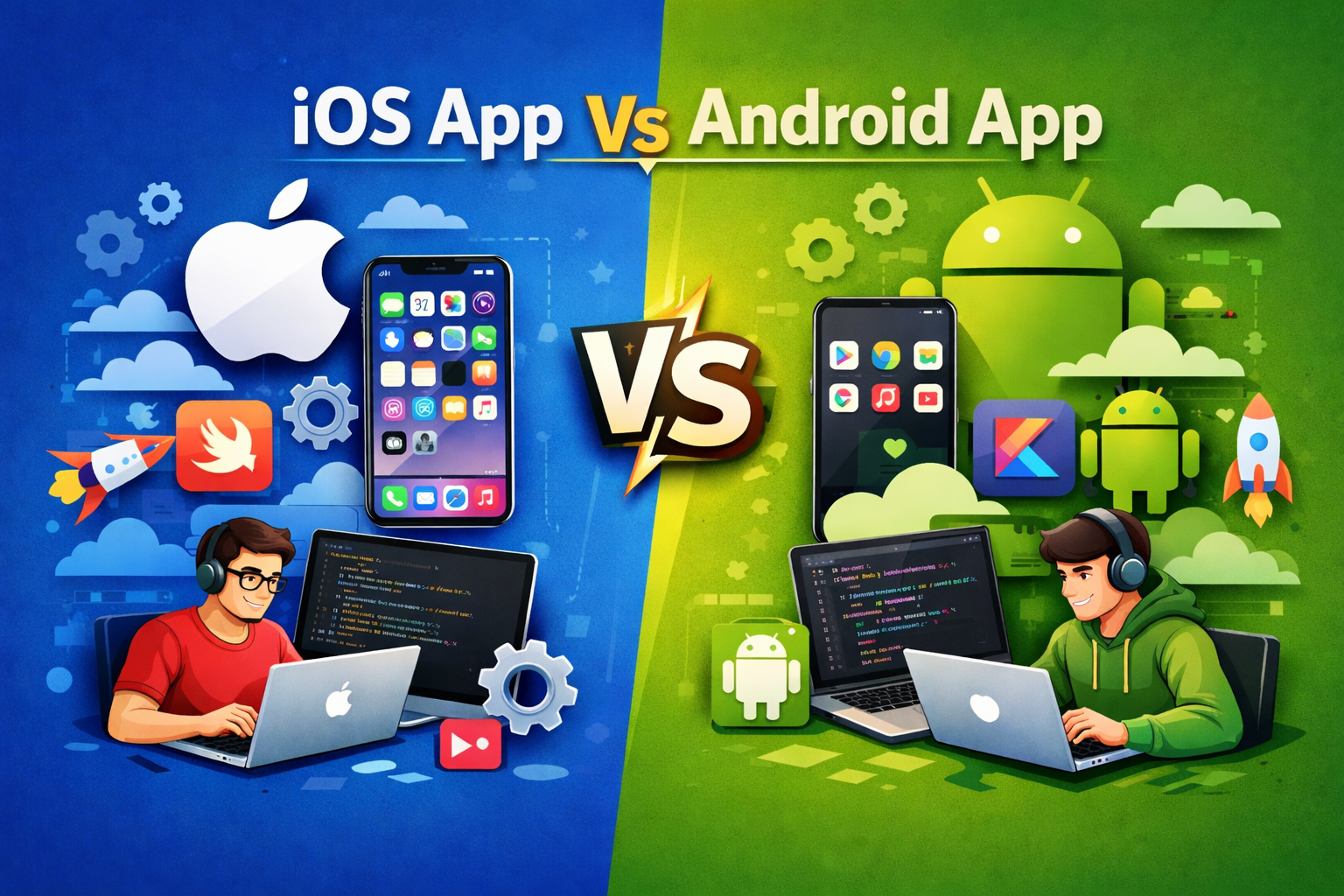
Imagine you’re a business owner with a great app idea. You’ve validated the concept, secured a budget, and now you’re ready to build—but then comes the big question: iOS app development vs Android, which one should you choose first? This is a real challenge faced by startups and enterprises every day. Some teams rush into development without considering their target audience, budget, or long-term goals, only to realize later that the platform choice limits growth or increases costs. Understanding the difference between iOS and Android app development early can save time, money, and frustration. In this article, we’ll break down both platforms in a simple, practical way to help you make the right decision from the start.
Interestingly, Android holds a larger global market share, while iOS users tend to spend more on apps. This makes the decision far more strategic than it seems. In this article, we’ll break down the differences between iOS and Android app development, compare costs, performance, security, and user experience, and help you decide which platform is right for your app. Whether you’re a startup founder or a business owner, this guide will simplify your decision.
Understanding the Basics of iOS and Android App Development
Before diving into the comparison, let’s understand what each platform involves.
What Is iOS App Development?
iOS app development focuses on building applications for Apple devices like iPhones and iPads. These apps are developed using Swift or Objective-C and distributed through the Apple App Store.
What Is Android App Development?
Android app development targets devices running the Android operating system. Apps are built using Kotlin or Java and published on the Google Play Store.
Both platforms are powerful—but very different in approach.
iOS App Development vs Android: Key Differences at a Glance
| Feature | iOS App Development | Android App Development |
| Programming Languages | Swift, Objective-C | Kotlin, Java |
| Devices | Limited (Apple only) | Wide variety of devices |
| App Store | Apple App Store | Google Play Store |
| Development Cost | Generally higher | Often more flexible |
| User Spending | Higher | Lower, but larger audience |
Market Share and Target Audience
Android Market Reach
Android dominates global markets, especially in Asia, Africa, and South America. It’s ideal if your app targets a large and diverse audience.
iOS User Base
iOS is more popular in North America, Western Europe, and Australia. iOS users generally have higher purchasing power, making it attractive for premium apps.
When comparing iOS app development vs Android, audience location and spending habits matter a lot.
Also Read: SaaS vs Custom Software: Which One Is Right for Your Business?
iOS App Development vs Android in the Future of AI
The future of AI is already reshaping mobile app development on both platforms. AI-driven features such as personalized recommendations, voice assistants, predictive analytics, and automation are becoming standard expectations.
Modern software development solutions now integrate AI to:
- Improve user experience through personalization
- Automate testing and performance optimization
- Enhance app security and fraud detection
- Enable smarter decision-making with real-time data
Both iOS and Android support AI frameworks, but implementation depends on your platform strategy and long-term roadmap.
App Design and User Experience
iOS Design Philosophy
Apple enforces strict design guidelines, resulting in:
- Clean interfaces
- Consistent user experience
- High-quality visuals
Android Design Flexibility
Android allows:
- More UI customization
- Device-specific design options
- Greater creative freedom
If consistency matters most, iOS wins. If flexibility matters, Android takes the lead.
Performance and Hardware Optimization
iOS Performance
Because Apple controls both hardware and software:
- Apps are highly optimized
- Performance is consistent
- Fewer compatibility issues
Android Performance
Android apps must run on many devices, which can:
- Affect performance consistency
- Require additional optimization
- Increase testing effort
This is a major point in the iOS app development vs Android debate.
Security and App Approval Process
iOS Security
- Strict App Store review
- Strong data protection
- Lower malware risk
Android Security
- Faster app approval
- More open ecosystem
- Higher risk if security is ignored
For apps handling sensitive data, iOS is often the preferred choice.

Monetization: Which Platform Earns More?
iOS Monetization
- Higher in-app purchases
- Strong subscription models
- Better ROI for paid apps
Android Monetization
- More free apps
- Ad-based revenue models
- Wider user base
If revenue is your main goal, iOS often wins—but Android offers scale.
Development Timeline Comparison
iOS App Development Timeline
- Faster development cycles
- Less device fragmentation
Android App Development Timeline
- Longer testing phases
- Device compatibility challenges
This difference directly impacts launch speed.
Step-by-Step: How to Choose Between iOS and Android
Step 1: Define Your Target Audience
Where are your users located, and what devices do they use?
Step 2: Set Your Budget
iOS and Android have different cost structures.
Step 3: Choose Monetization Strategy
Subscriptions, ads, or paid downloads?
Step 4: Consider Time-to-Market
Need a faster launch? iOS may be easier.
Step 5: Think Long-Term
Will you expand to both platforms later?
Should You Choose Cross-Platform Development?
If you don’t want to pick between iOS and Android, cross-platform frameworks like Flutter or React Native allow you to build for both.
Pros
- Faster development
- Lower cost
- Shared codebase
Cons
- Slight performance trade-offs
- Limited access to native features
Cross-platform can be a smart compromise.
Conclusion: Making the Right Choice Between iOS and Android
The debate around iOS app development vs Android isn’t about which platform is better—it’s about which one aligns with your business goals today and tomorrow. As software development solutions become more advanced and the future of AI continues to shape mobile experiences, choosing a platform that supports scalability, innovation, and intelligent features is crucial. Whether you start with iOS, Android, or both, making a well-informed decision now sets the foundation for long-term success.